Artway
Web App · Blockchain / NFT · Early-stage Startup
Designing a blockchain-powered art platform from zero
Role:
Brand Identity, UX/UI, Design System, Visual Strategy
Stack:
Figma, Invision

The Problem
Digital artists face a structural vulnerability: their work can be copied, re-shared, and stripped of attribution in seconds. The internet made art more visible and authorship more fragile. Artway's answer was to use blockchain technology to issue tamper-proof certificates of authenticity, permanently linking each work to its creator. Strong concept. But concepts don't convert users, products do. The real challenge wasn't technical. It was perceptual. NFTs and blockchain carry significant accessibility barriers: jargon-heavy, opaque, often associated with speculation rather than creative protection. User interviews confirmed it: 8 people from the art and design field all pointed to the same friction: the NFT world felt inaccessible and poorly explained, and existing digital art platforms delivered frustrating experiences. The product had to do something rare: make blockchain feel simple, trustworthy, and genuinely useful to artists who don't care about the underlying technology, but only about protecting what they've made.
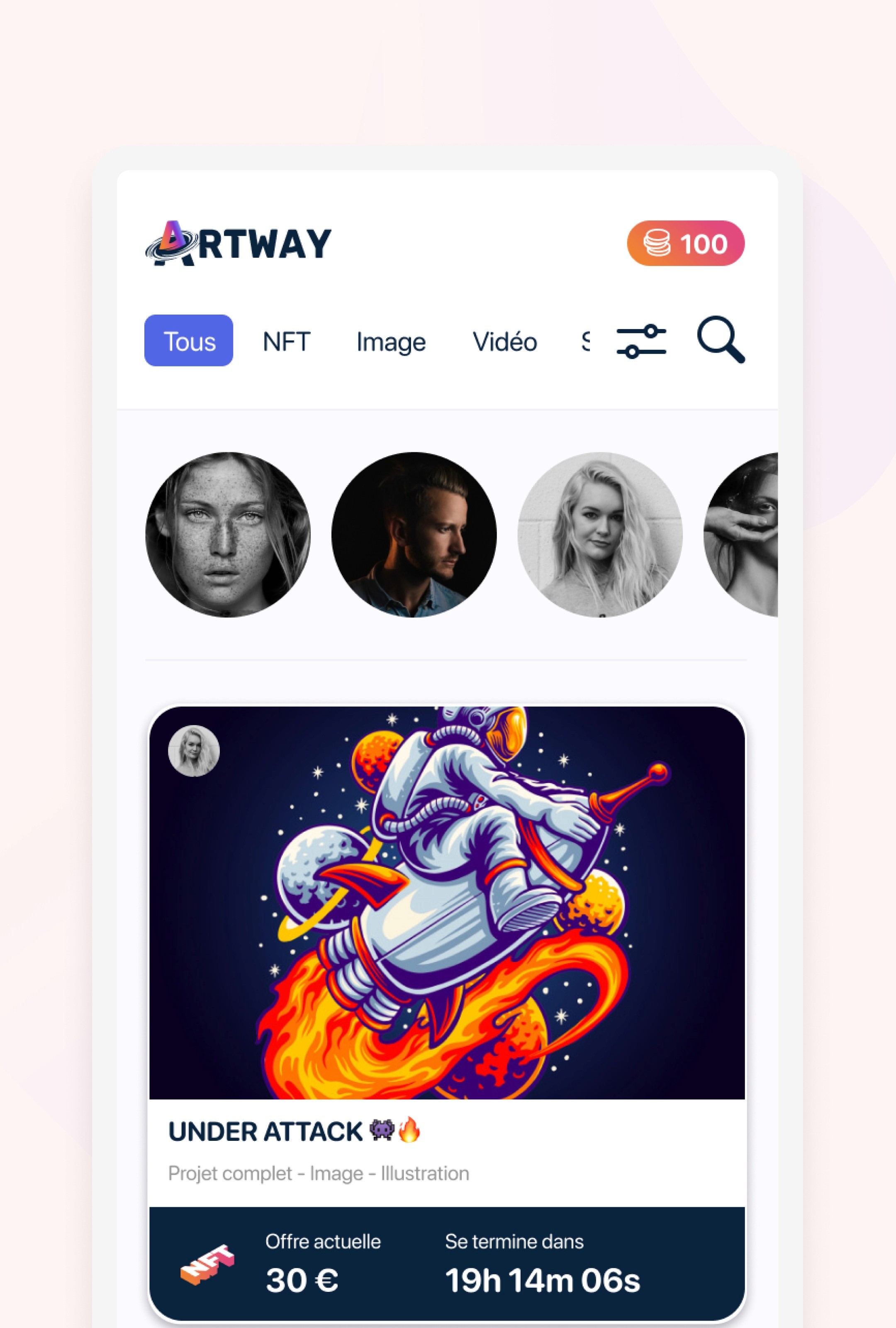
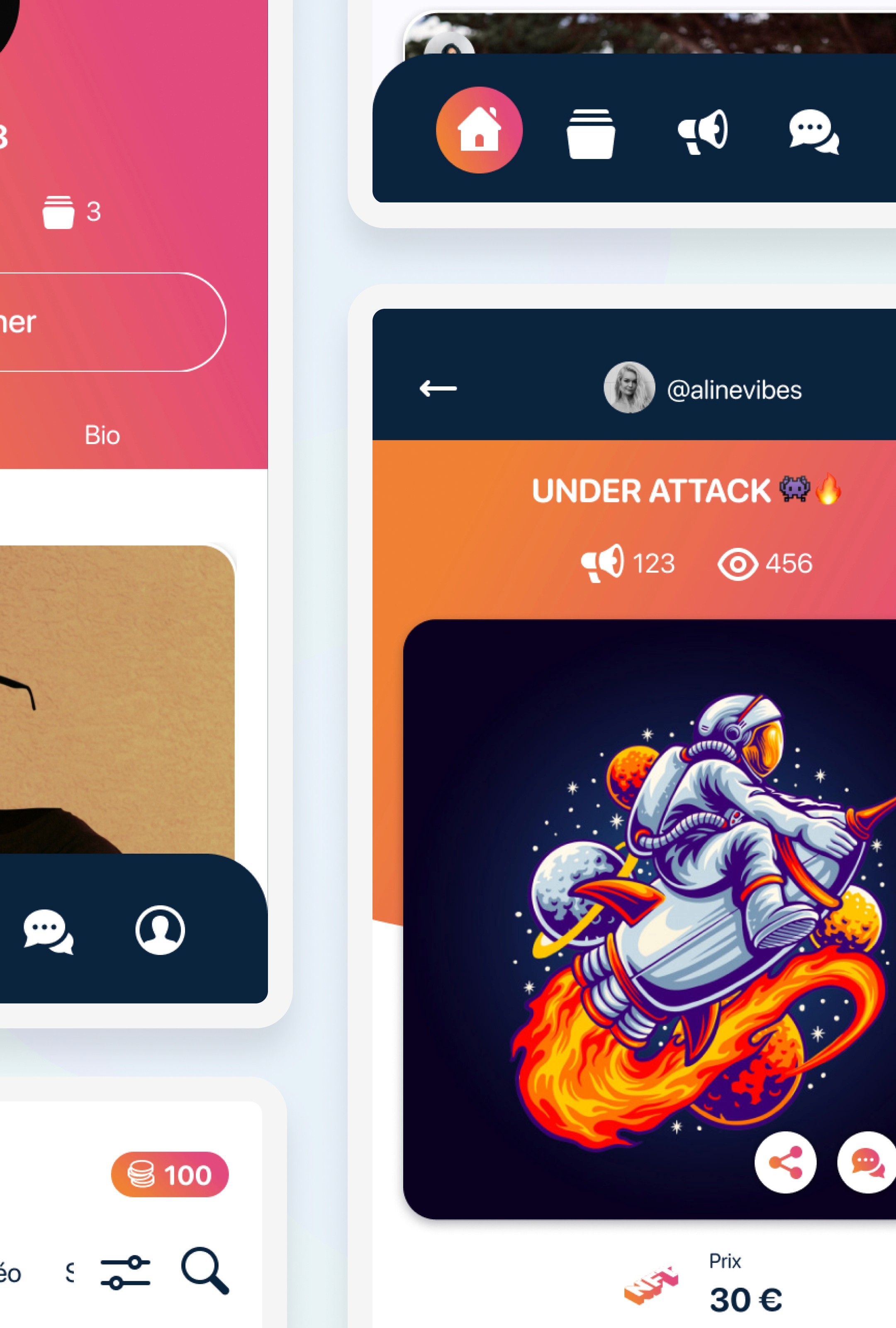
My Contribution
As a Product Strategist
I embedded myself with the tech team early, running benchmarks on direct and indirect competitors, mapping user journeys, and leading ideation sessions to define the MVP scope. The startup wasn't familiar with lean or design thinking principles, so part of my role was evangelizing that approach: helping the team understand why prioritization matters, and how to evaluate features against four axes (value risk, usability risk, feasibility risk, and business viability). That framing shaped every product decision that followed.
As a Lead Product Designer
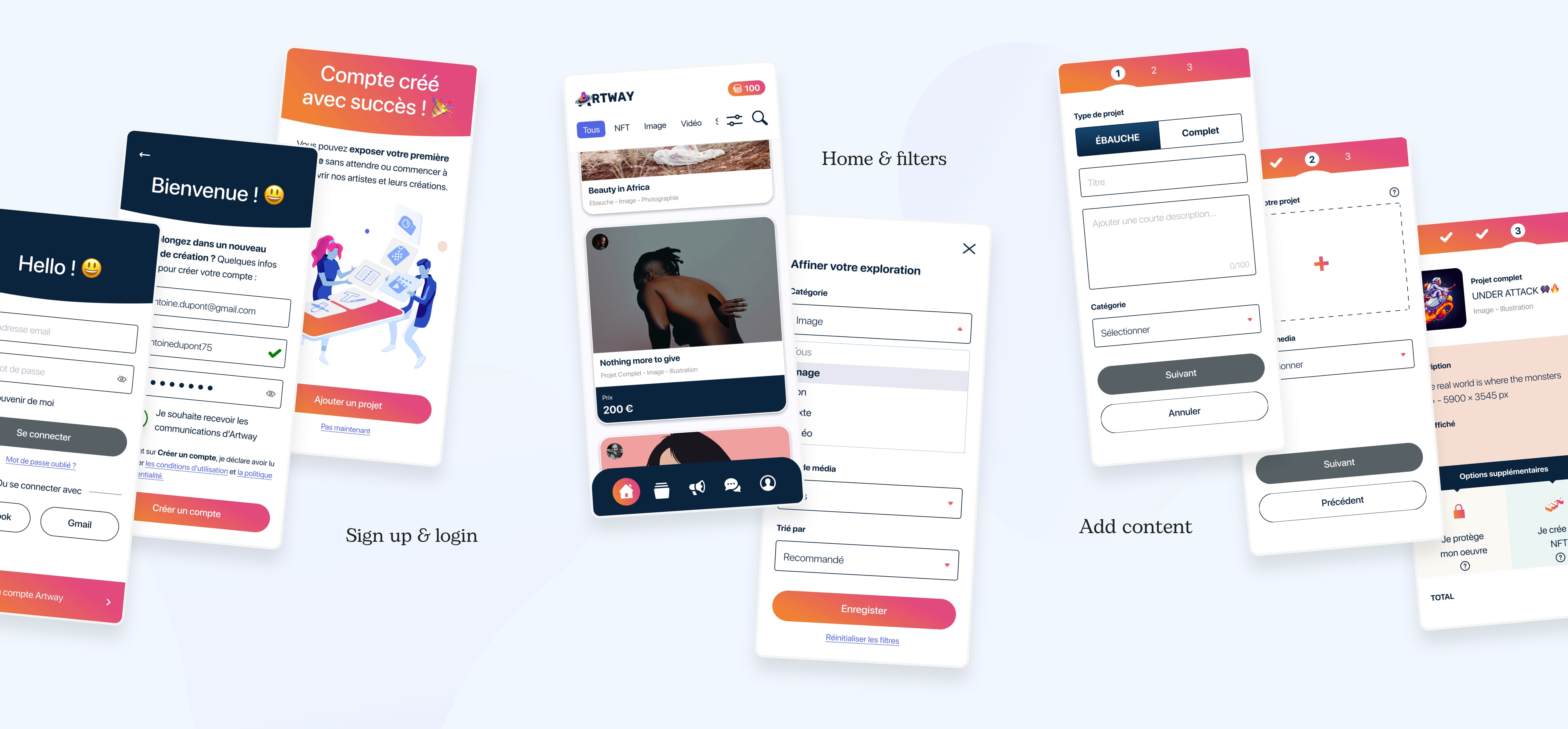
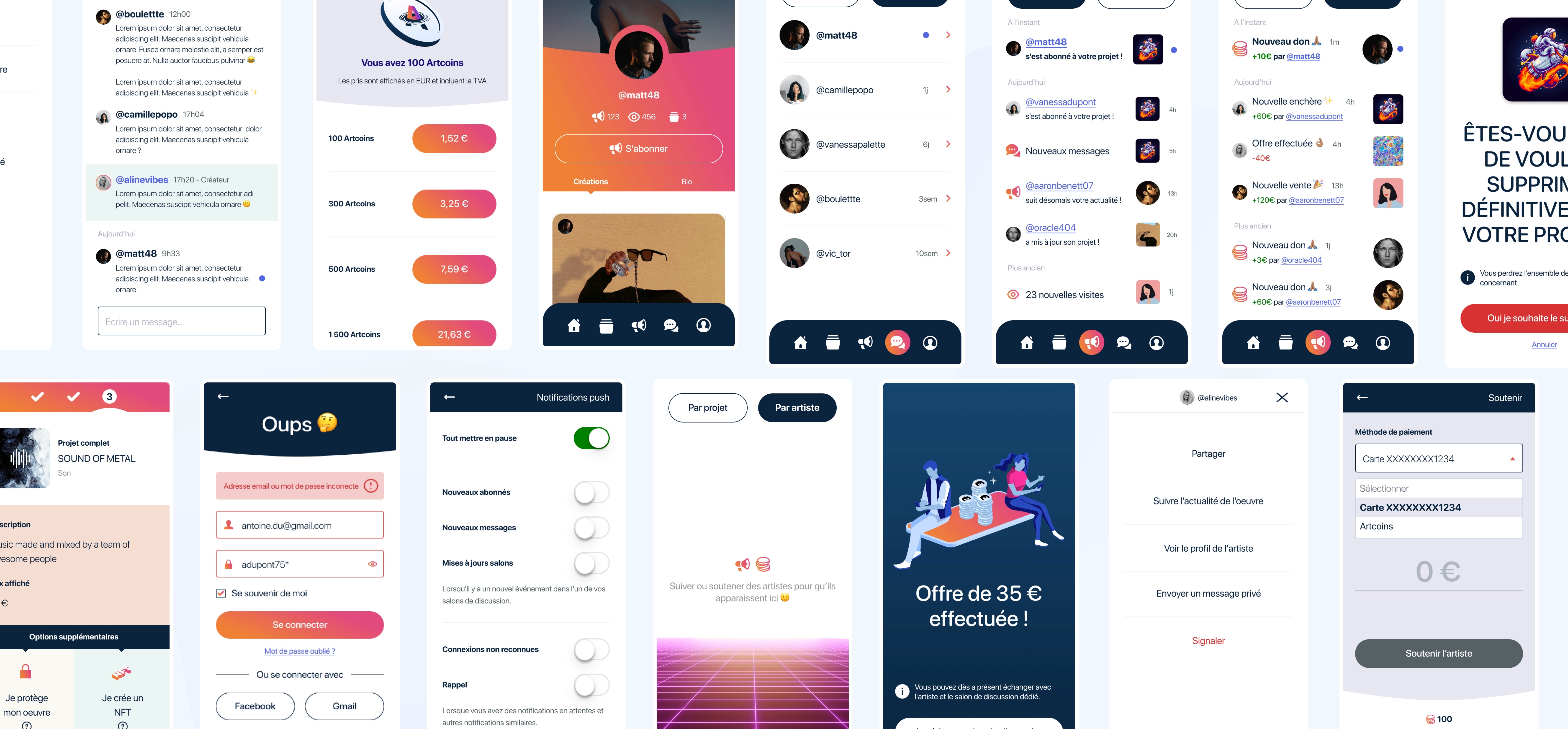
I owned the full design stack: brand identity, UX/UI across the app, lo-fi and hi-fi mockups, interactive prototype, and usability testing. I ran multiple testing rounds to surface pain points before development. Each iteration fed directly back into the design, tightening the experience around the core user need: deposit a work, get a certificate, feel protected.
As a Design System Architect
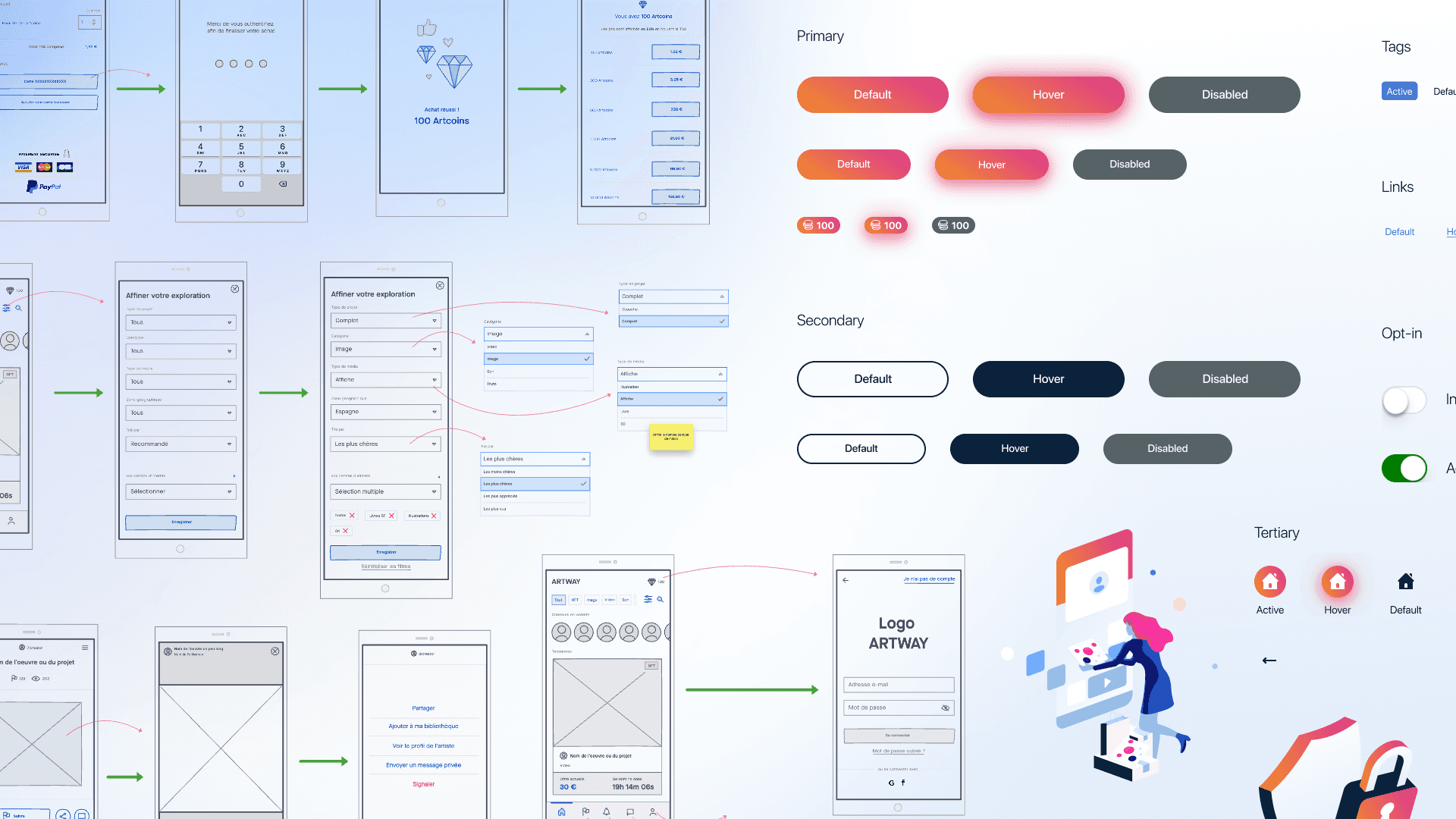
I built the Artway UI kit from scratch using an atomic design framework, starting from the most fundamental elements (colors, typography, core components) and expanding progressively. This wasn't a nice-to-have. For a startup where the team would grow and evolve, a design system is an investment in speed and consistency: a new team member could open Figma and start contributing immediately, without needing to reverse-engineer design decisions.
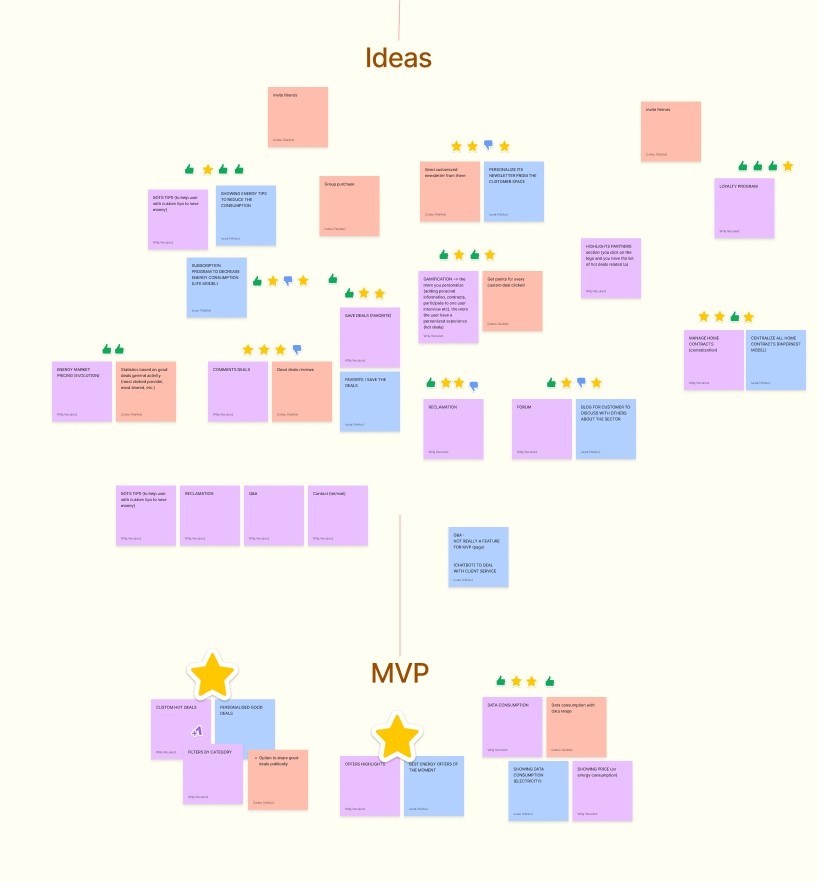
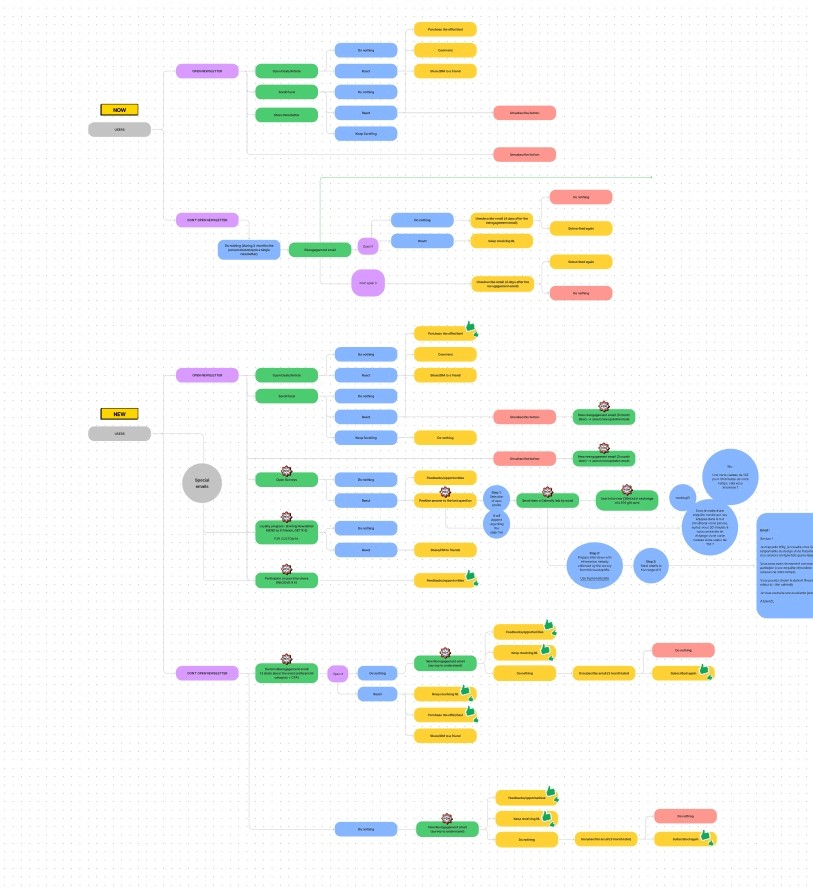
Key Decisions
Simplicity as the core design principle
Given the accessibility barrier of the NFT/blockchain space, the visual language needed to actively counter the complexity users associated with the category. I chose a deliberately minimalist direction: clean illustrations, restrained palette, no visual noise. Every element had to earn its place. The message had to be: this is simpler than you think.
Building the design system in parallel with the product
A common startup mistake is to defer the design system until the product "stabilizes." I pushed to build it from day one, even at MVP stage. The reason: a startup's design debt compounds fast. By establishing atomic components early, I gave the tech team a consistent handoff language, reduced back-and-forth on implementation, and made every subsequent design iteration faster. The first version didn't need to be perfect, it needed to make an impact immediately.
Illustrations as UX, not decoration
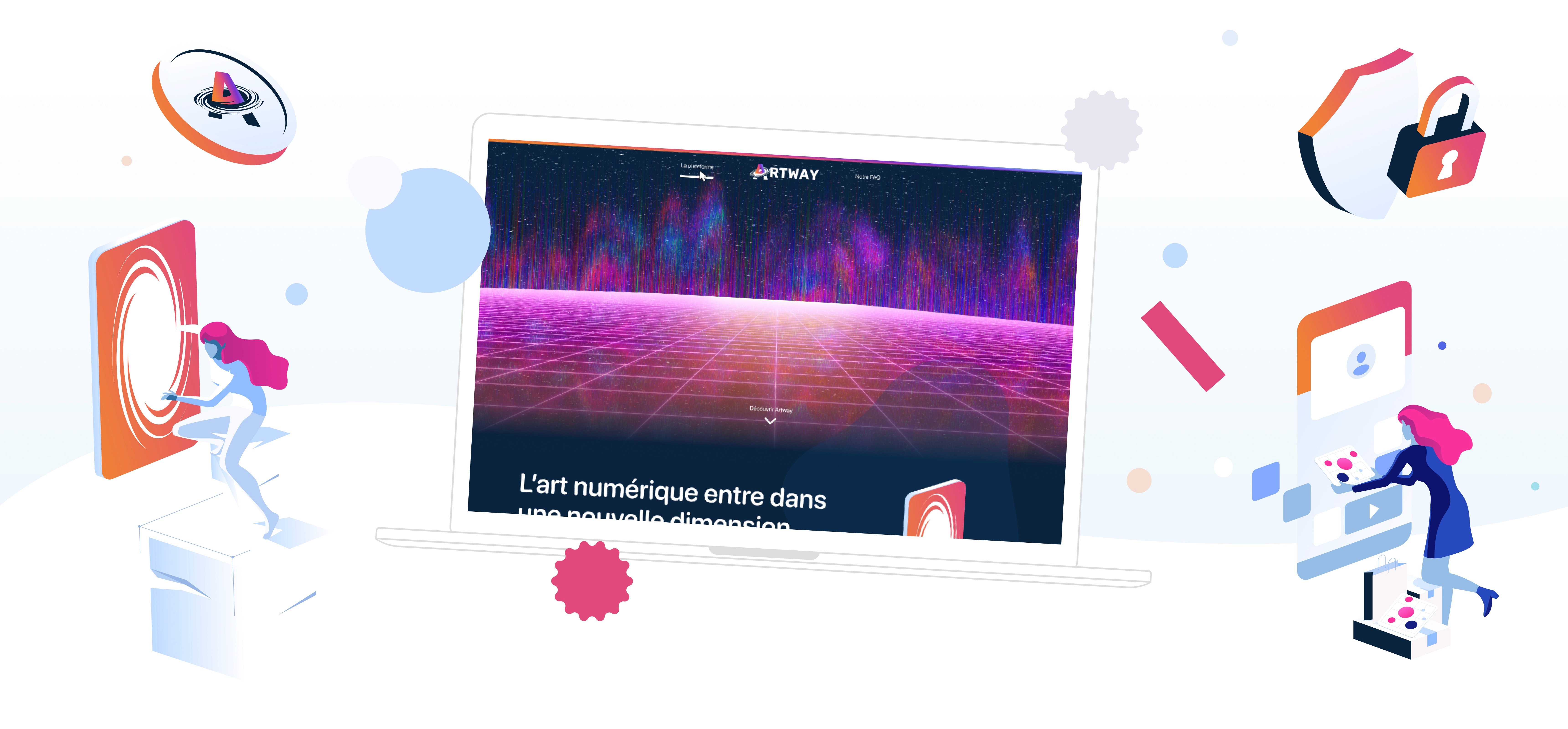
Illustrations became a significant part of the user experience, not as embellishment but as a functional layer to explain abstract concepts (blockchain, certification, authenticity) without relying on text alone. Translating illustration into a systematic language that could work across the full product was one of the harder design challenges on this project. The solution was to treat illustration components with the same atomic logic as UI components: defined styles, defined use cases, defined constraints.
MVP scoping through risk assessment
Rather than building a feature wishlist and cutting it down under pressure, I introduced a four-axis risk evaluation for every proposed feature: value risk (do users actually want this?), usability risk (can they use it?), feasibility risk (can we build it now?), business viability risk (does it serve the model?). Features that couldn't pass all four were deferred.
Impact
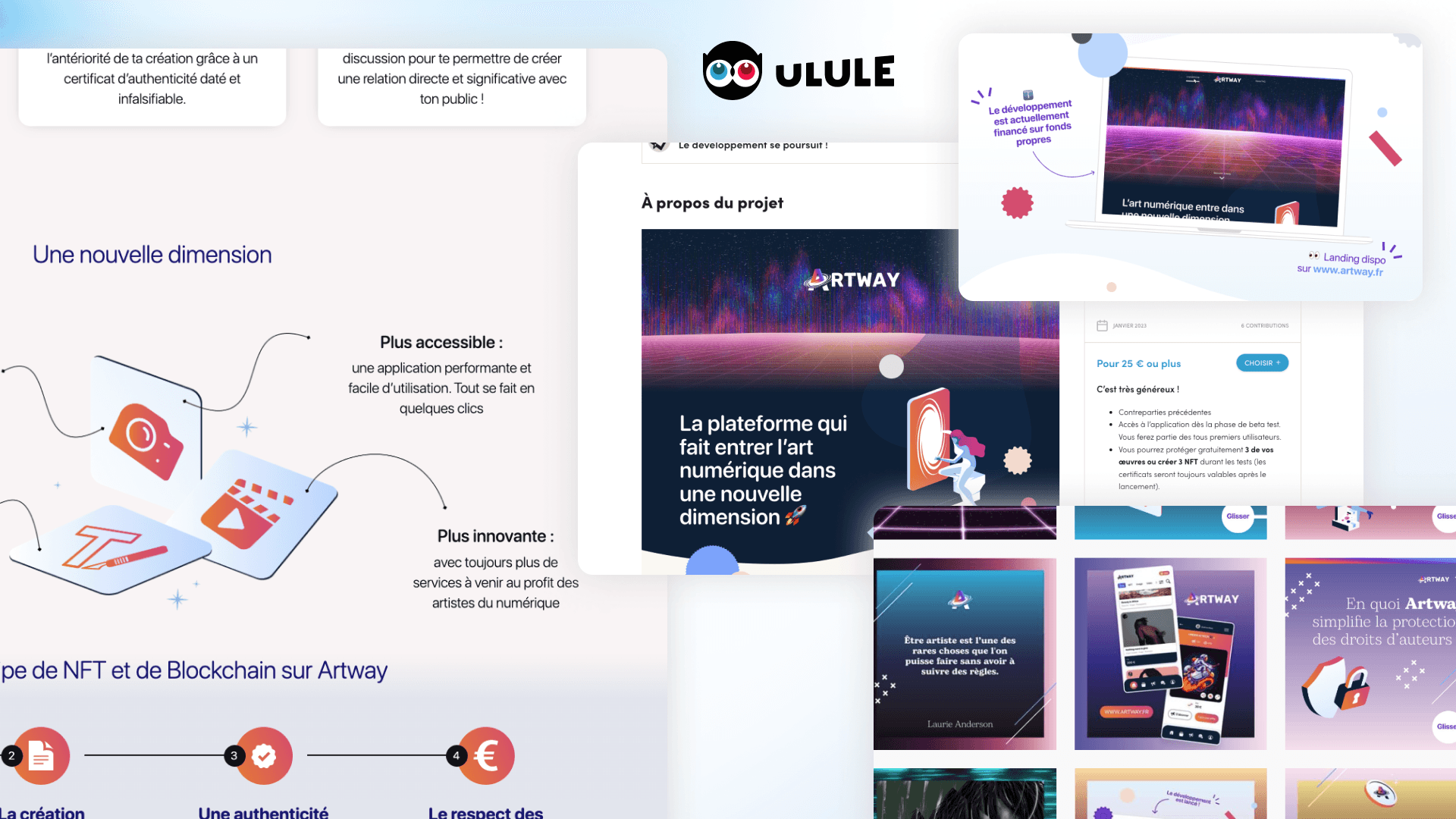
The concrete milestones: MVP delivered, landing page live, crowdfunding campaign launched on Ulule. For an early-stage startup operating in an experimental space, those are meaningful markers: enough to validate that the product could attract attention and communicate its value. And since the product was still in its early stages when I was involved, here's what I would have tracked as the next measurement layer:
Certificate deposit rate: the north star metric. How many users who land on the platform actually complete a deposit? Everything in the UX was designed to reduce friction on that journey. A low deposit rate would signal either a trust issue or a UX failure.
Onboarding completion rate: given the accessibility barrier of the category, how many users make it through the first-time experience without dropping off? This is where the simplicity bets either pay off or don't.
Time to first certificate: how long does it take a new user to go from signup to their first authenticated deposit? Shorter is better, but the floor is set by the blockchain transaction time. Any friction beyond that technical minimum is a UX problem I own.
Crowdfunding conversion rate: the campaign on Ulule was a public signal of the product's ability to communicate its value to a cold audience. Tracking who converted, from which channels, and what messaging they responded to would have directly informed the go-to-market strategy.
Stack & Process at a glance
User Research → Competitive Benchmark → Feature Prioritization (Risk Matrix) → User Journey Mapping → Brand Identity → Lo-fi Mockups → Design System (Atomic) → Hi-fi UI → Interactive Prototype → Usability Testing → MVP Launch → Crowdfunding
→ Crowdfunding / Website / Instagram